
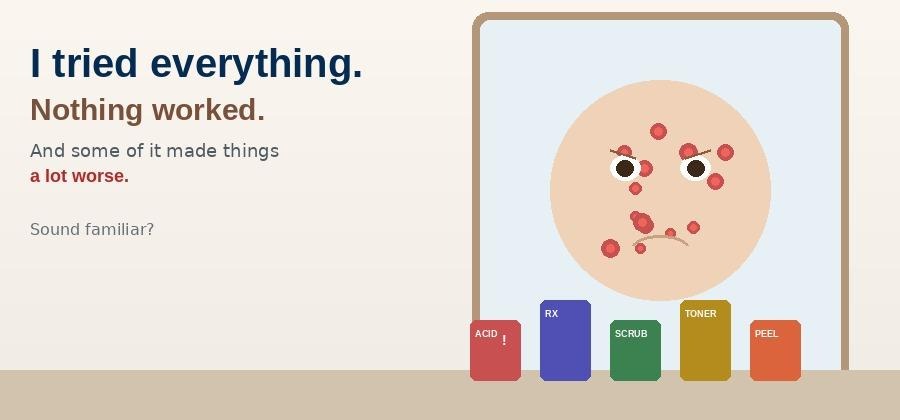
I Spent Years Putting Dangerous Chemicals on My Face. Then I Found What My Body Was Already Making.
By Curativa Bay · Real Talk Skincare Series
🛁 Chapter One: The Bathroom Cabinet of Shame
Let me paint you a picture.
It’s 7 a.m. I’m standing in front of a bathroom mirror, running through a routine that takes longer than my entire morning workout. Cleanser. Toner. Spot treatment. Prescription cream. Moisturizer. Another moisturizer, because the first one dried me out. SPF because I’m terrified of the photosensitivity warning on my retinoid. Concealer over the parts nothing helped.
I was 24. I had been doing some version of this since I was 14.
My skin was the thing I thought about first when I woke up and last before I fell asleep. Whether it looked okay today. Whether the concealer would hold. Whether someone across the table could see what I was desperately trying to hide.
“If I just find the right product, it’ll finally work.”
I told myself that for ten years.
📃 Chapter Two: The Things They Told Me to Use
We have been handed some genuinely alarming products and told to put them on our faces.
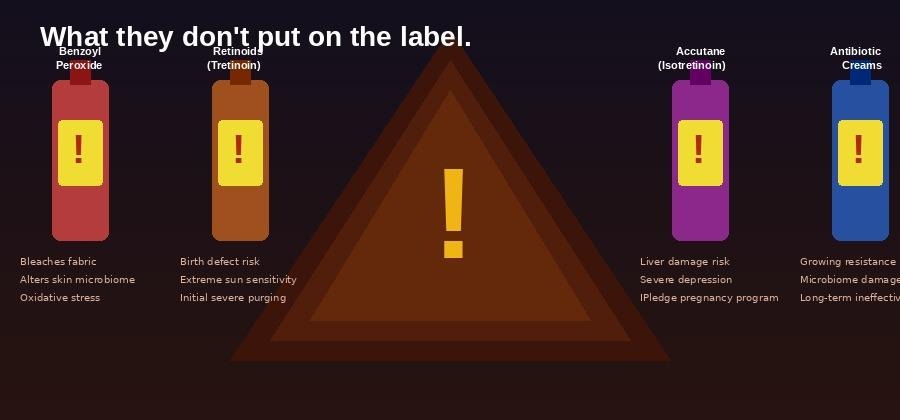
The common acne treatments on the market today carry risks most people are never told about.
I don’t say this to scare you. I say it because no one said it to me, and I wish someone had.
When you’re desperate and your skin is affecting your confidence, your relationships, your willingness to show up in your own life — you will try things. You will try everything. And the skincare and pharmaceutical industry knows that. Which is why some of what gets handed to us, recommended by dermatologists, sold in every pharmacy, is genuinely worth being informed about.
Here is what I went through. Maybe some of it sounds familiar.
Benzoyl Peroxide
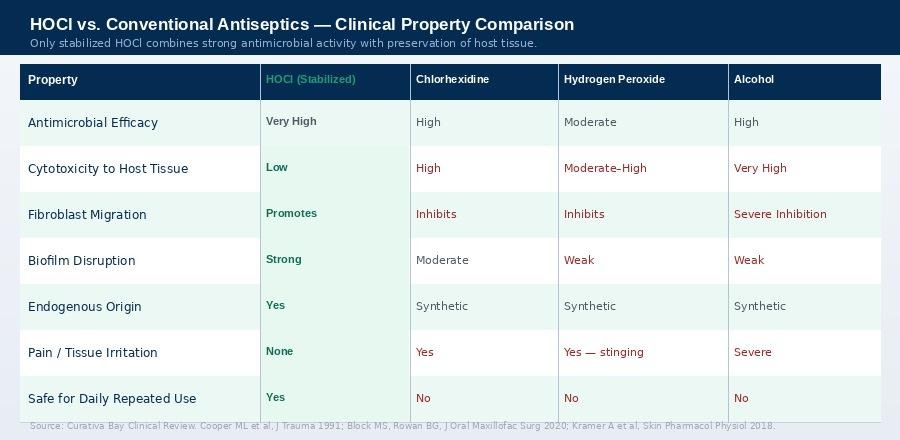
It bleached every pillowcase I owned. Every towel. Every shirt collar. That part they do tell you. What they tell you less often is that benzoyl peroxide generates free radicals on the skin — the same kind of oxidative stress linked to premature aging. It doesn’t discriminate between harmful bacteria and the healthy microbiome your skin actually depends on. It kills everything. And when you strip your skin’s protective ecosystem repeatedly, you often end up more vulnerable — more reactive, more prone to the very breakouts you’re trying to prevent.
I used it for three years. My skin never really cleared. It just stayed perpetually irritated.
| ⚠ What research says about benzoyl peroxide:• Generates reactive oxygen species (free radicals) that can damage healthy skin cells• Destroys the skin microbiome indiscriminately, disrupting the skin’s natural defense system• Can cause chemical burns at higher concentrations, particularly on sensitive skin• Long-term use may contribute to antibiotic resistance in combination treatments• Does not address the underlying inflammation that drives persistent acne |
Prescription Retinoids (Tretinoin, Retin-A)
I was put on tretinoin at 22. My dermatologist spent about four minutes with me, handed me a prescription, and told me to “expect some peeling.” What followed was six weeks of what can only be described as my face falling off. Peeling, burning, raw, perpetually red — and all of this while I was supposed to be showing up to work and pretending everything was fine.
Retinoids work, eventually, for some people. But the “purging” phase is brutal, they make you photosensitive in a way that requires strict SPF compliance for years, and the warnings — which are printed in small text inside the packaging — include things most people would want to know before they start.
| ⚠ What the packaging says in fine print:• Retinoids are Category X for pregnancy — they cause severe birth defects, period• Extreme photosensitivity: sun exposure can cause permanent hyperpigmentation• Initial “purging” causes significant worsening of acne for weeks to months• Dryness, peeling, and compromised skin barrier are expected, not side effects• Should not be used near the eyes, mouth, or on broken/sensitive skin |
Accutane (Isotretinoin) — The One They Push When Nothing Else Works
I was offered Accutane at 19. I said no, mostly because my mother read about it and cried. I watched friends go through it. The drug works — for many people it clears acne permanently — but the cost is extraordinary.
People on Accutane must be enrolled in a mandatory government surveillance program called iPLEDGE because the drug causes such severe birth defects that the FDA determined it required monitoring at the national level. That alone should give us pause about how freely it is prescribed to teenagers.
| ⚠ Accutane carries some of the most serious warnings in all of dermatology:• Causes severe, life-threatening birth defects — mandatory pregnancy testing required• Linked to depression, suicidal ideation, and psychiatric events in clinical literature• Can cause liver damage — requires blood monitoring throughout treatment• Inflammatory bowel disease association has been debated in litigation for years• Extreme dry skin, cracked lips, dry eyes, and joint pain are near-universal side effects• Required federal iPLEDGE program enrollment to dispense — unprecedented for a skincare drug |
I am not telling you these treatments never work. They do, for some people, in some contexts. I am telling you that for years, no one offered me an alternative framing. No one said: before we go here, let’s think about what your skin is actually asking for.
| We were handed powerful, risky interventions and told they were our only option. They weren’t. |
🔬 Chapter Three: The Question That Changed Everything
What if the problem isn’t that I haven’t found the right chemical yet?
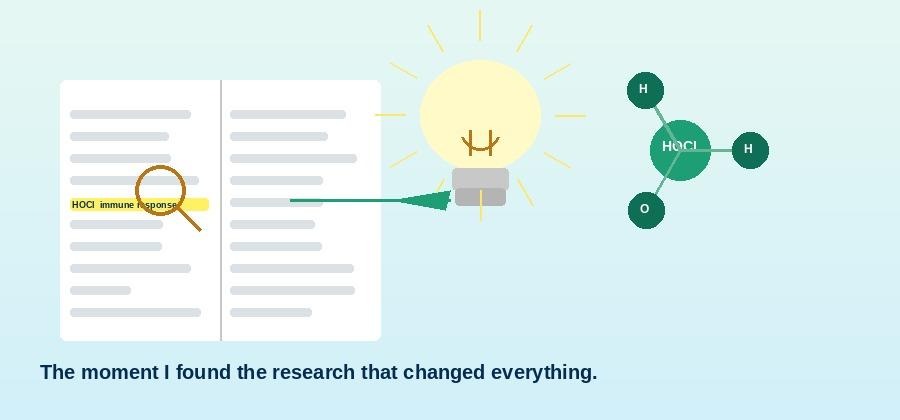
The research had been there all along. I just didn’t know where to look.
I was 26 when I finally got tired enough to stop.
Not tired of trying. Tired of the approach. Tired of the idea that my skin was a problem to be chemically suppressed rather than a system to be understood.
I started reading — not product reviews, not dermatology marketing, but actual immunology research. The kind of thing no one hands you in a 10-minute derm appointment.
And I kept finding the same molecule.
Hypochlorous acid. HOCl.
My first reaction was confusion. I’d never heard of it in the context of skincare. My second reaction, once I understood what it actually was, was something between relief and frustration.
“Why did no one tell me about this?”
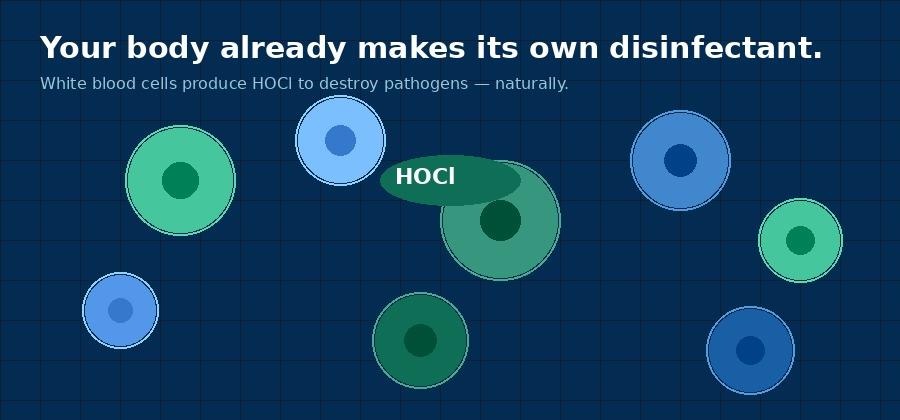
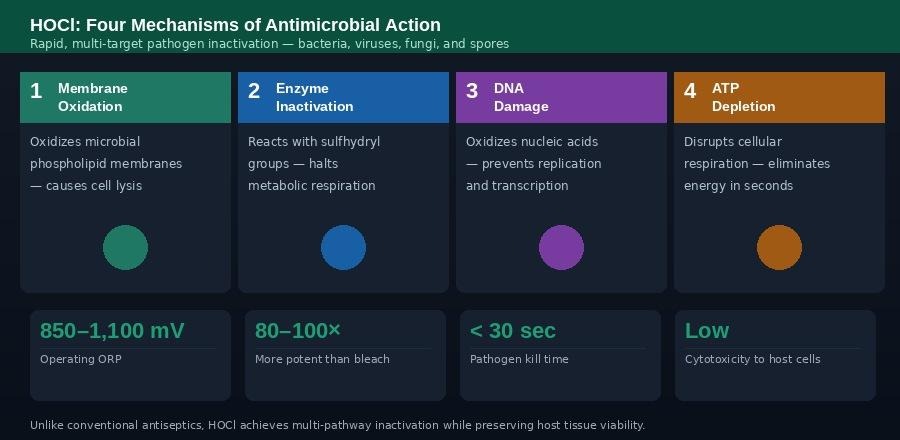
HOCl is produced by your own white blood cells. Every time your immune system encounters bacteria, viruses, or infected tissue, it releases HOCl to neutralize the threat. It’s been doing this inside you your entire life. It’s one of the most powerful antimicrobial compounds in the human body — and simultaneously one of the most gentle, because it has to be. It has to be safe enough to exist inside you.
| Your immune system has been making the perfect skincare ingredient since before you were born. We just hadn’t figured out how to put it in a bottle yet. |
🧠 Chapter Four: Why It Works Differently For Acne, Rosacea, and Eczema
This isn’t a one-size-fits-all ingredient. It’s smarter than that.
One of the things I found most interesting about HOCl is that it doesn’t work the same way for every condition. It addresses each condition through a different mechanism — which is why it helps so many people with very different skin concerns.
For Acne:
Acne starts inside the pore, where C. acnes bacteria proliferates and triggers an inflammatory immune response. Most treatments try to address this from the outside, with varying success and significant collateral damage.
HOCl is electrically neutral, which means it can pass through bacterial cell membranes and disrupt function from the inside. It kills C. acnes directly — but unlike benzoyl peroxide, it doesn’t generate oxidative stress or wipe out your skin’s protective microbiome in the process. It’s targeted in the way that only your own immune system can be.
| What makes HOCl different for acne:• Neutralizes C. acnes at the source without creating antibiotic resistance• Reduces the inflammatory response that causes the swelling and redness• Leaves the surrounding healthy microbiome completely intact• Gentle enough to use twice daily, even on active, inflamed breakouts• No purging period. No photosensitivity. No oxidative stress. |
For Rosacea:
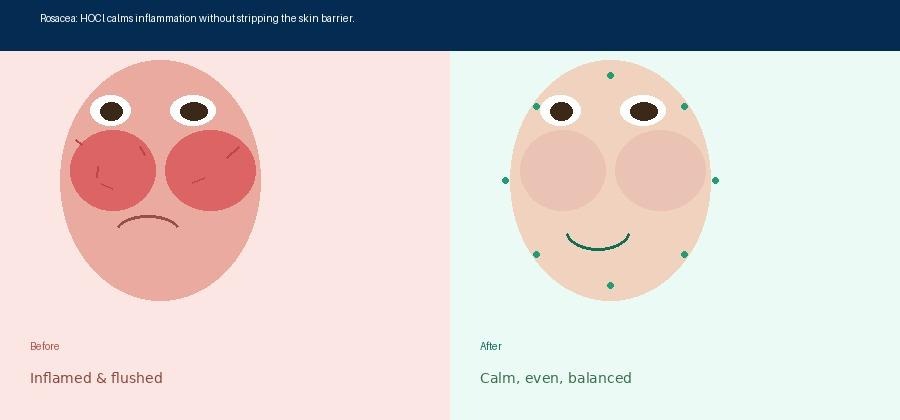
HOCl calms the inflammation cycle without triggering further sensitivity.
Rosacea is a chronic inflammatory condition that most people with rosacea know is almost impossible to fully control. Triggers are everywhere — sun, heat, alcohol, stress, spicy food. And the cruel irony of rosacea is that many of the treatments prescribed for it make your skin more sensitive over time, not less.
HOCl helps rosacea in a way that I find genuinely elegant. Research has shown that demodex mites — microscopic creatures that live on all human skin — are present in much higher numbers on rosacea-prone skin, and that they’re likely a significant driver of the inflammatory cascade. HOCl reduces demodex populations. It also calms the inflammatory cytokine response directly, without suppressing the immune system the way steroids do.
And because it’s pH-balanced to 5.5 — matching healthy skin — it doesn’t disrupt the acid mantle or cause the additional sensitivity that rosacea skin simply cannot tolerate.
| For rosacea, the gentleness isn’t a compromise. It’s the point.• Reduces demodex mite populations associated with rosacea flares• Calms inflammatory cytokine response without immunosuppression• pH 5.5 — exactly matched to healthy skin, so it never disrupts the acid mantle• No stinging, burning, or photosensitivity• Safe to use during an active flare when everything else is too harsh |
For Eczema:
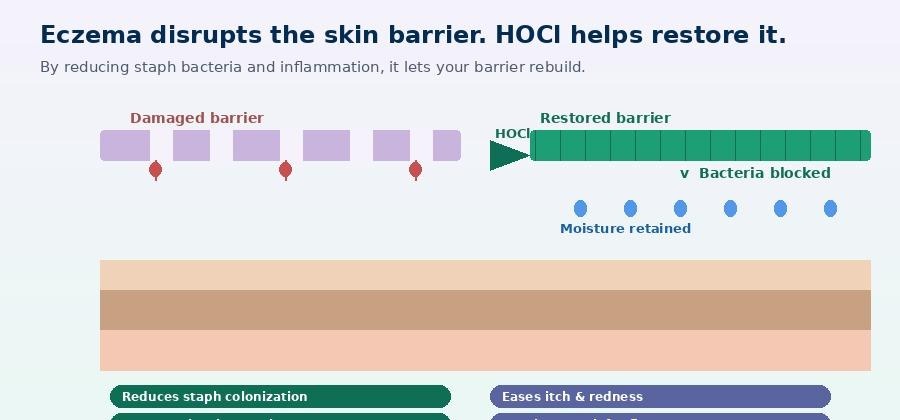
Eczema is a barrier disorder. HOCl helps by addressing the bacteria that break the barrier down.
Eczema is fundamentally a skin barrier failure — and one of its key drivers is Staphylococcus aureus colonization. People with eczema have dramatically elevated staph on their skin, and this bacterium actively fuels the itch-inflammation-scratch cycle that makes eczema so relentlessly miserable.
The conventional management of eczema often involves steroid creams. They work in the short term. But long-term steroid use thins the skin, which makes the barrier even more compromised — which leads to more flares — which leads to more steroids. It’s a loop.
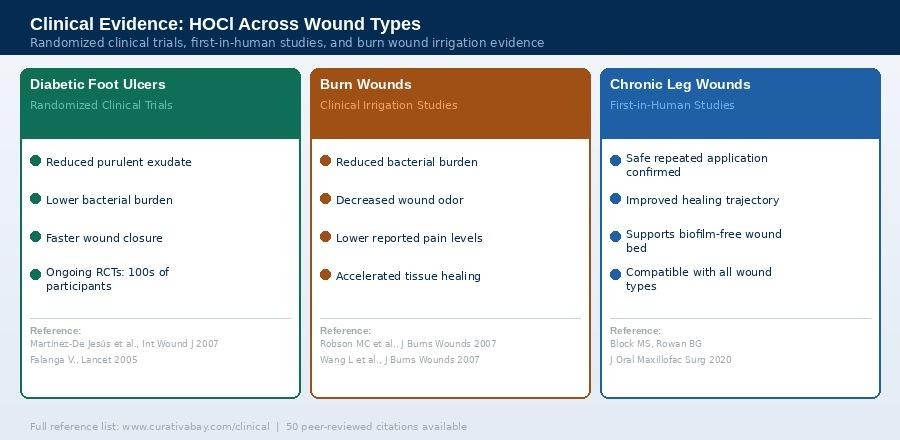
HOCl interrupts the loop at the staph level. A 2018 study in JAMA Dermatology found that dilute bleach baths — which produce HOCl in water — significantly reduced eczema severity. Stabilized HOCl spray delivers the same antimicrobial benefit without the bleach, without the drying, and without anything left behind on the skin after it’s done its job.
| HOCl and eczema — what the evidence shows:• Significantly reduces Staphylococcus aureus colonization on affected skin• Decreases itch severity and frequency during active flares• Supports skin barrier recovery by reducing the inflammatory bacterial load• Safe to use on broken, weeping, or infected eczema patches• Compatible with emollients and can be used in children• Breaks down to water and saline after use — nothing left behind on damaged skin |
✨ Chapter Five: What Actually Changed
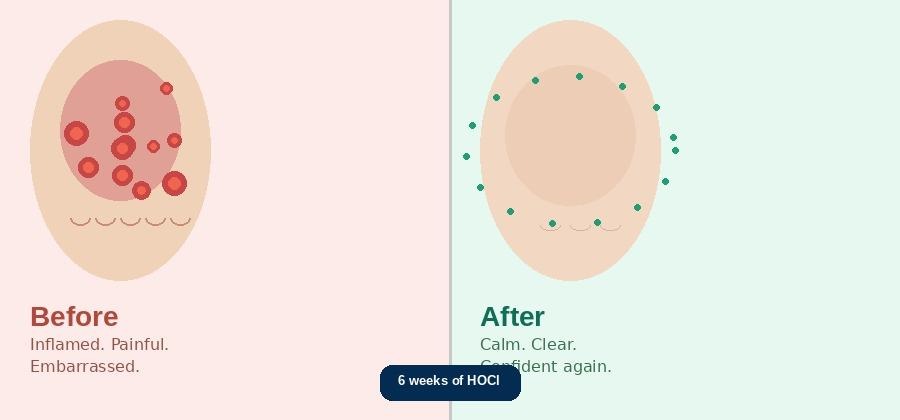
Six weeks. The same skin that hadn’t responded to anything in ten years.
I’m not going to tell you HOCl worked for me in three days. I’m going to tell you the truth.
The first week, I wasn’t sure anything was happening. The second week, I noticed I wasn’t waking up to new breakouts the way I always had. By the third week, the redness that had lived on my face for years — a permanent low-grade flush I had learned to stop noticing — started to quiet down.
By week six, my skin looked different. Not “Instagram filter” different. Just… like skin. Calm skin. The kind of skin I had forgotten I was supposed to have.
But the change that mattered most wasn’t the one I could see in the mirror.
It was that I stopped thinking about my skin as the enemy. I stopped treating it like a problem that needed to be chemically beaten into submission. I started understanding it as something with its own intelligence — something that, given the right support, knew what to do.
| Ten years of fighting my skin. Six weeks of working with it. The difference was everything. |
🌱 Chapter Six: What Your Skin Has Been Trying to Tell You
It never needed more aggression. It needed more intelligence.
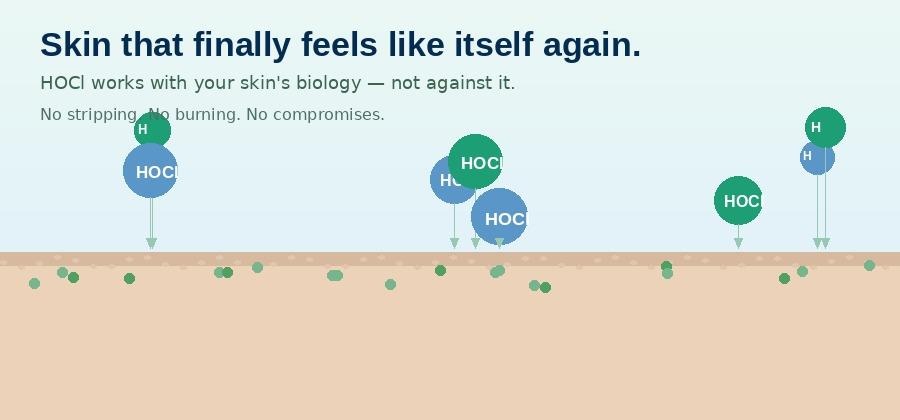
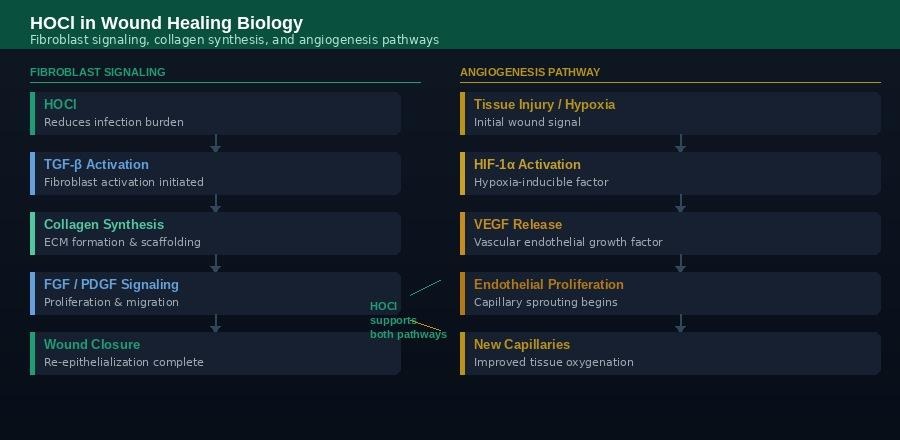
HOCl works with your skin’s own biology — then disappears, leaving nothing behind.
Your skin is not passive. It’s an active, intelligent system with its own microbiome, its own immune function, its own barrier chemistry. When it’s struggling — with acne, rosacea, eczema, or simple sensitivity — it’s not failing. It’s asking for something.
For most of us, what we’ve given it is more intervention. More acids. More actives. More prescription-strength compounds that force outcomes rather than support the system.
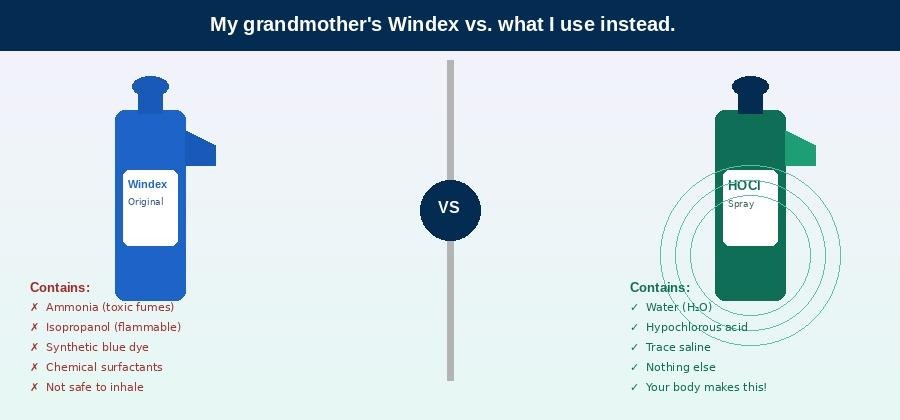
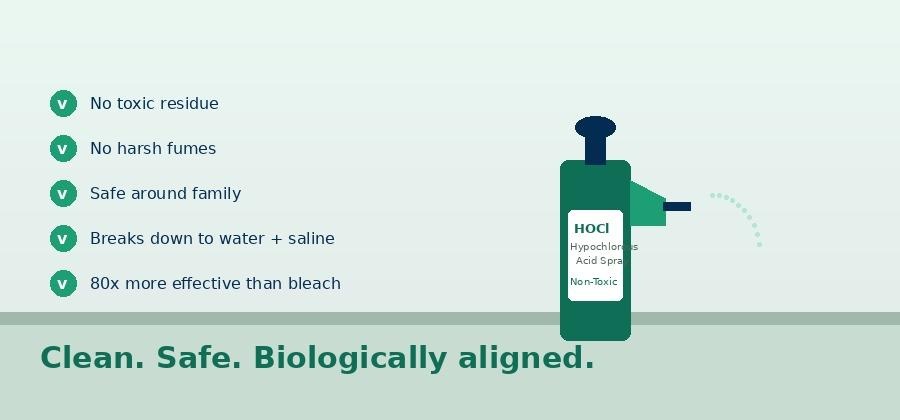
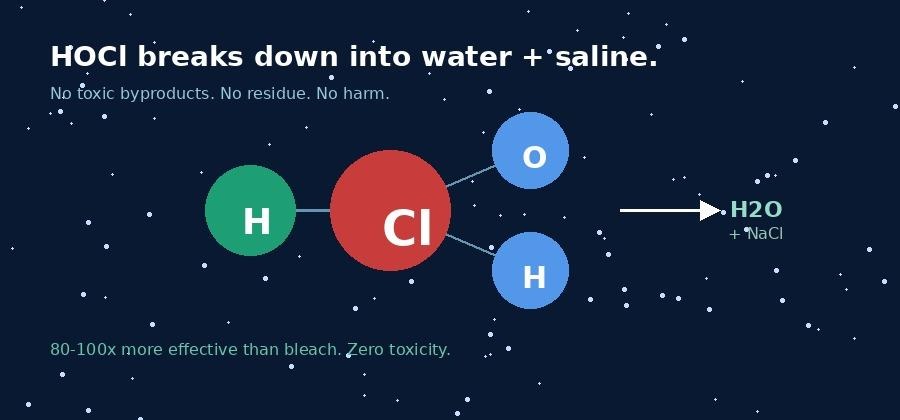
HOCl gives the skin something it can actually use — a molecule it already knows, already produces, already understands. And when it’s done, it breaks down into water and a trace of saline. It doesn’t leave residue. It doesn’t accumulate. It does its job and it’s gone.
That, to me, is what intelligent skincare actually looks like.
| Not the most powerful thing you can put on your face. The most aligned thing you can put on your face. |
If you’ve tried everything and nothing has worked,
maybe what you haven’t tried yet is working with your skin
instead of against it.
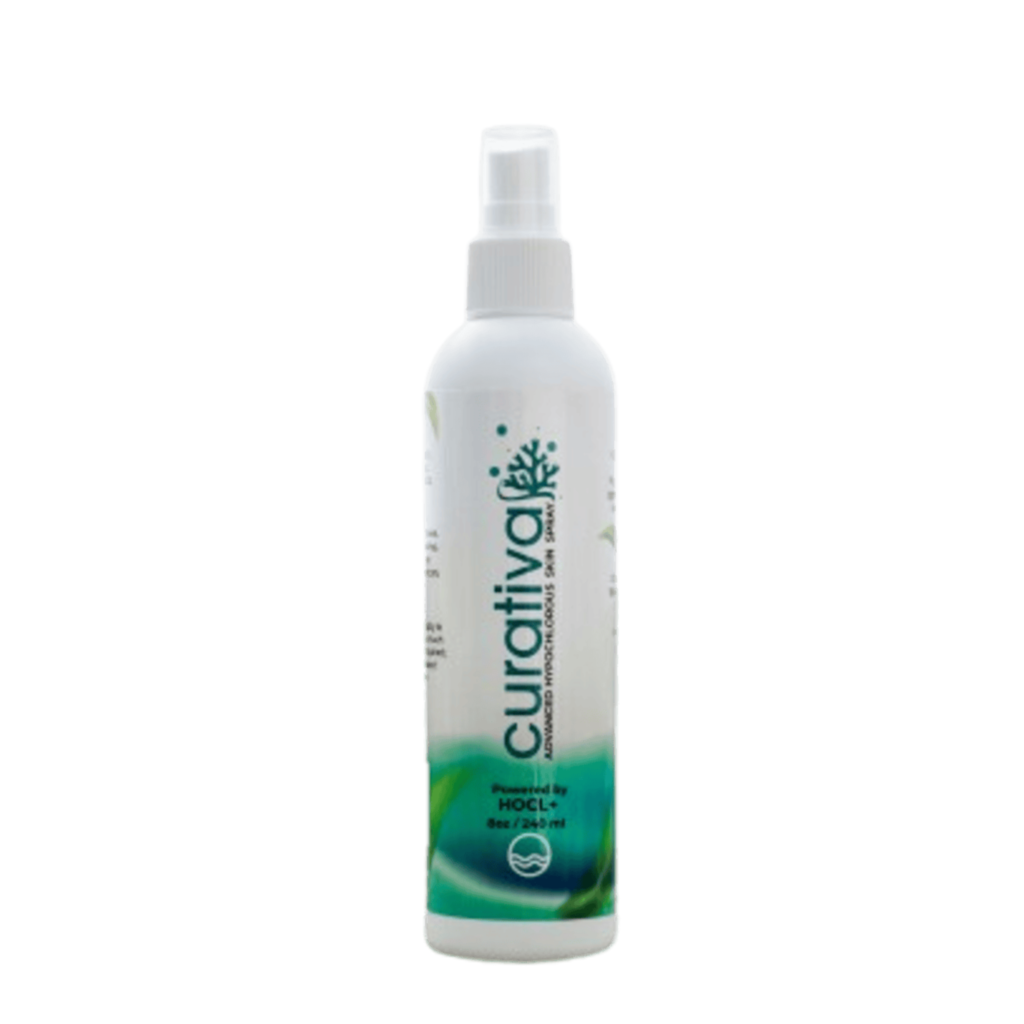
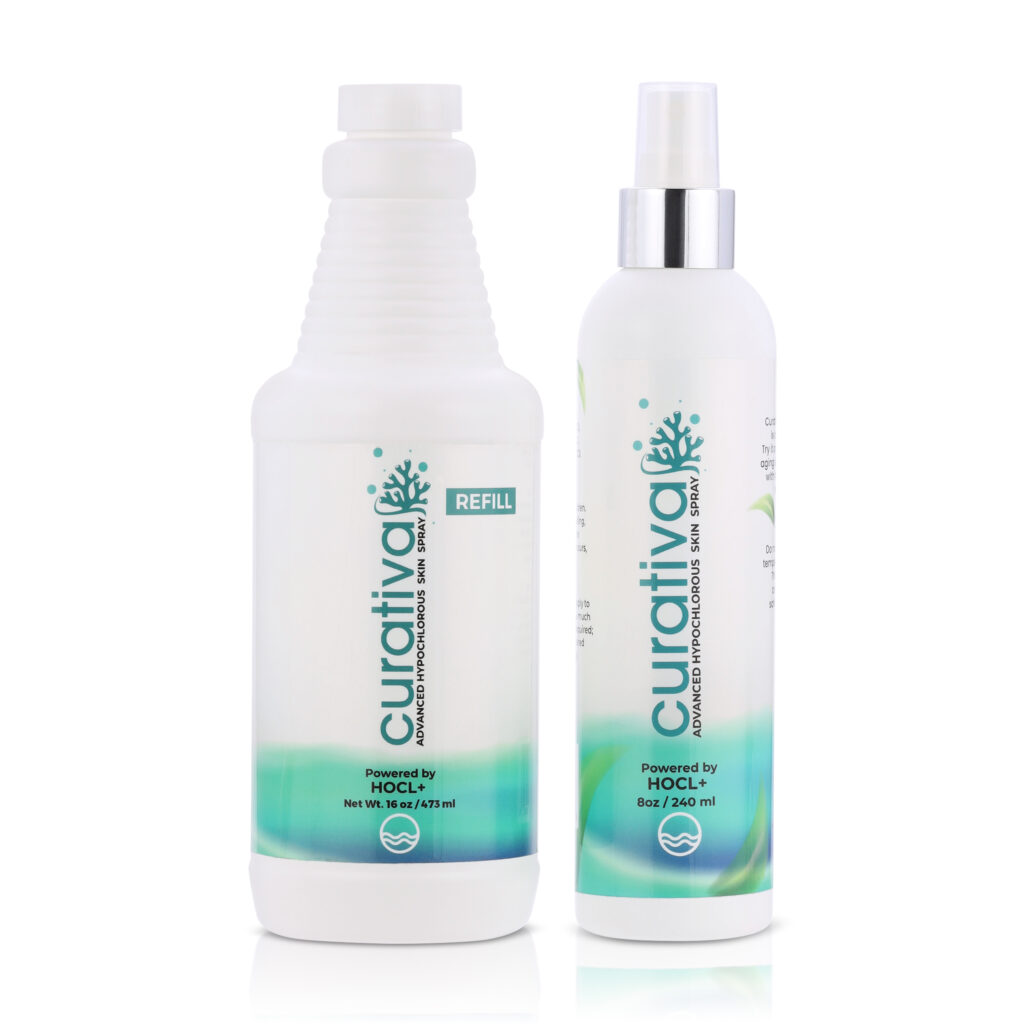
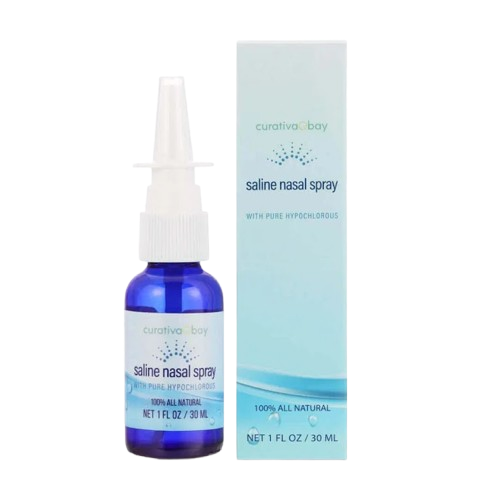
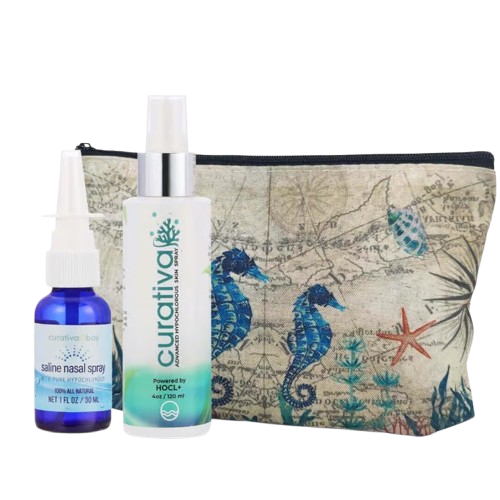
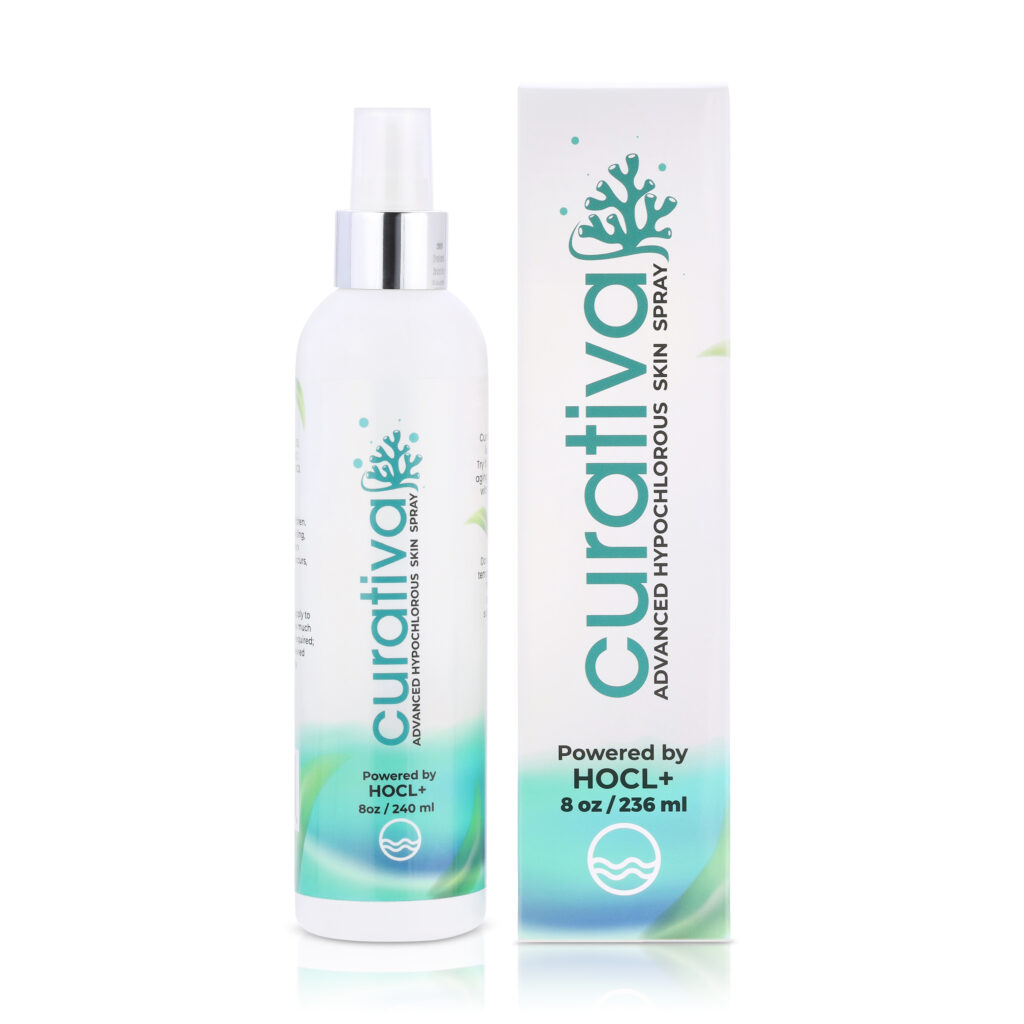
| Try Curativa Bay HOCl SkincareFormulated for acne · rosacea · eczema · sensitive skinClinical-grade HOCl · EPA-approved · pH-balanced · Made in the USA · Since 2016www.curativabay.com |
Copyright © 2026 Curativa Bay. All rights reserved. | This article reflects personal experience and educational research. It does not constitute medical advice. Consult a qualified healthcare provider for medical concerns.